
Jet charters Seattle
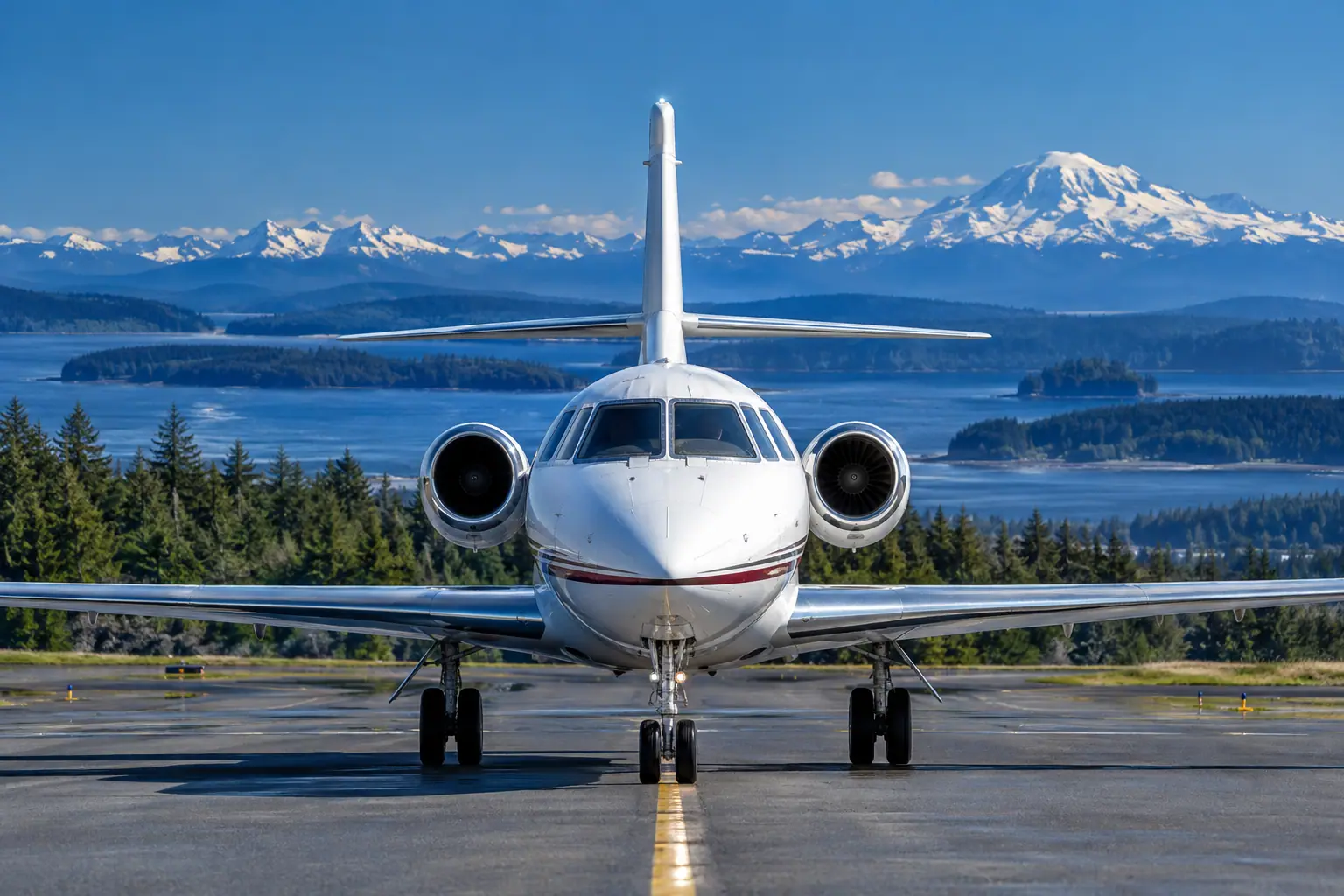
Jet charters Seattle work best when you start with the airport and aircraft class. A light jet runs 430 knots and typically carries 4-7 passengers. Estimates below come from hourly rates and route distances, not from a booking engine.
Aircraft classes for Seattle routes
A turboprop covers short regional legs and cruises near 300 knots with a typical range of 1,500 nautical miles. Light jets reach about 1,400 nautical miles, which handles most West Coast flying from Seattle. Midsize aircraft stretch that to 2,100 nautical miles, and super-midsize to 3,200.
For transcontinental and international legs, a heavy jet's 4,000-nautical-mile range matters more than cabin size. The 2,848-nautical-mile run to Turks and Caicos or the 2,507 to Nassau needs that margin, especially when winds and weather eat into it. Ask which aircraft the operator plans to send before you compare quotes, because the tail number tells you more than the class name does. Planesense and empty leg aircraft listed for Seattle move fast, so confirm the tail and operator before you compare cost.
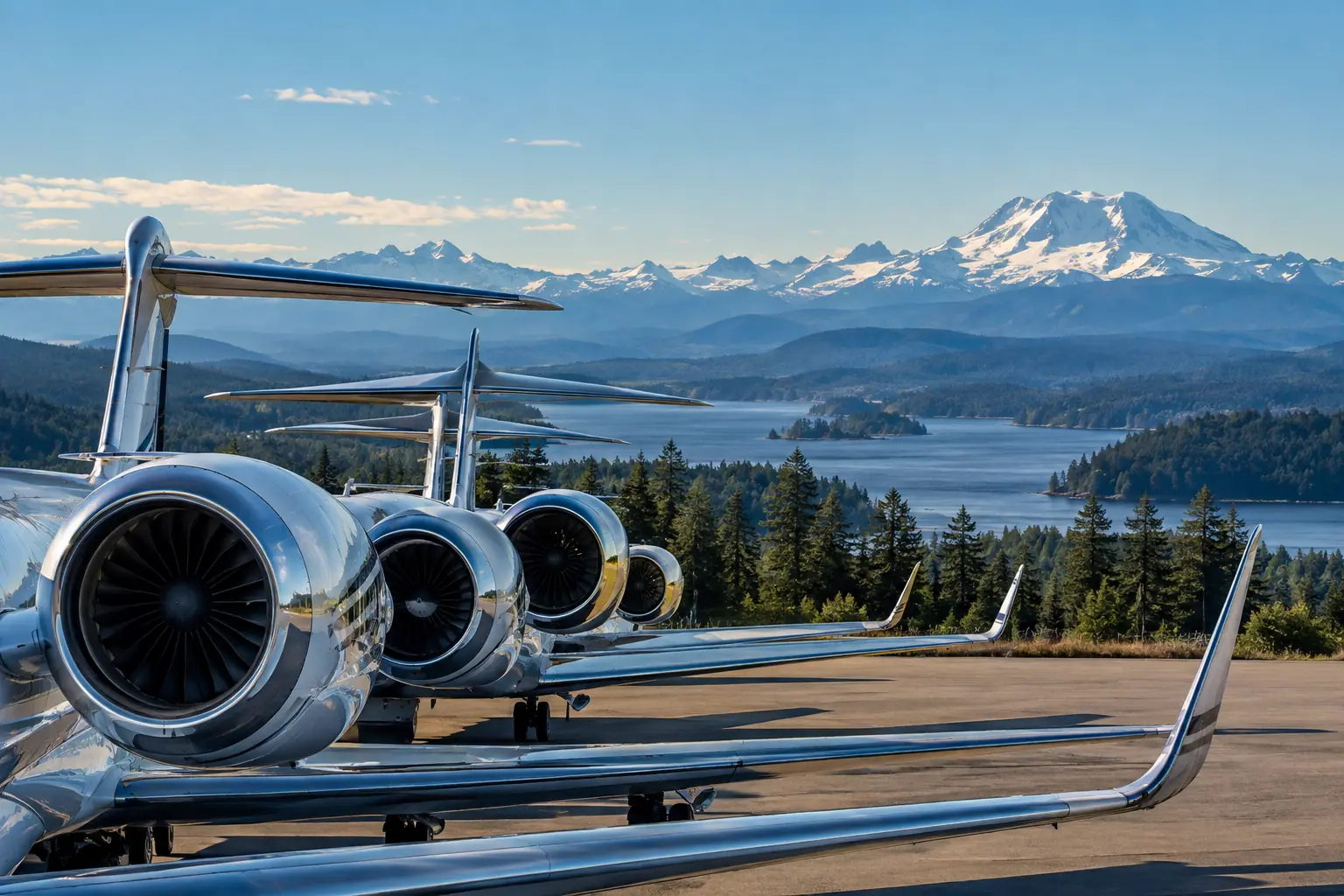
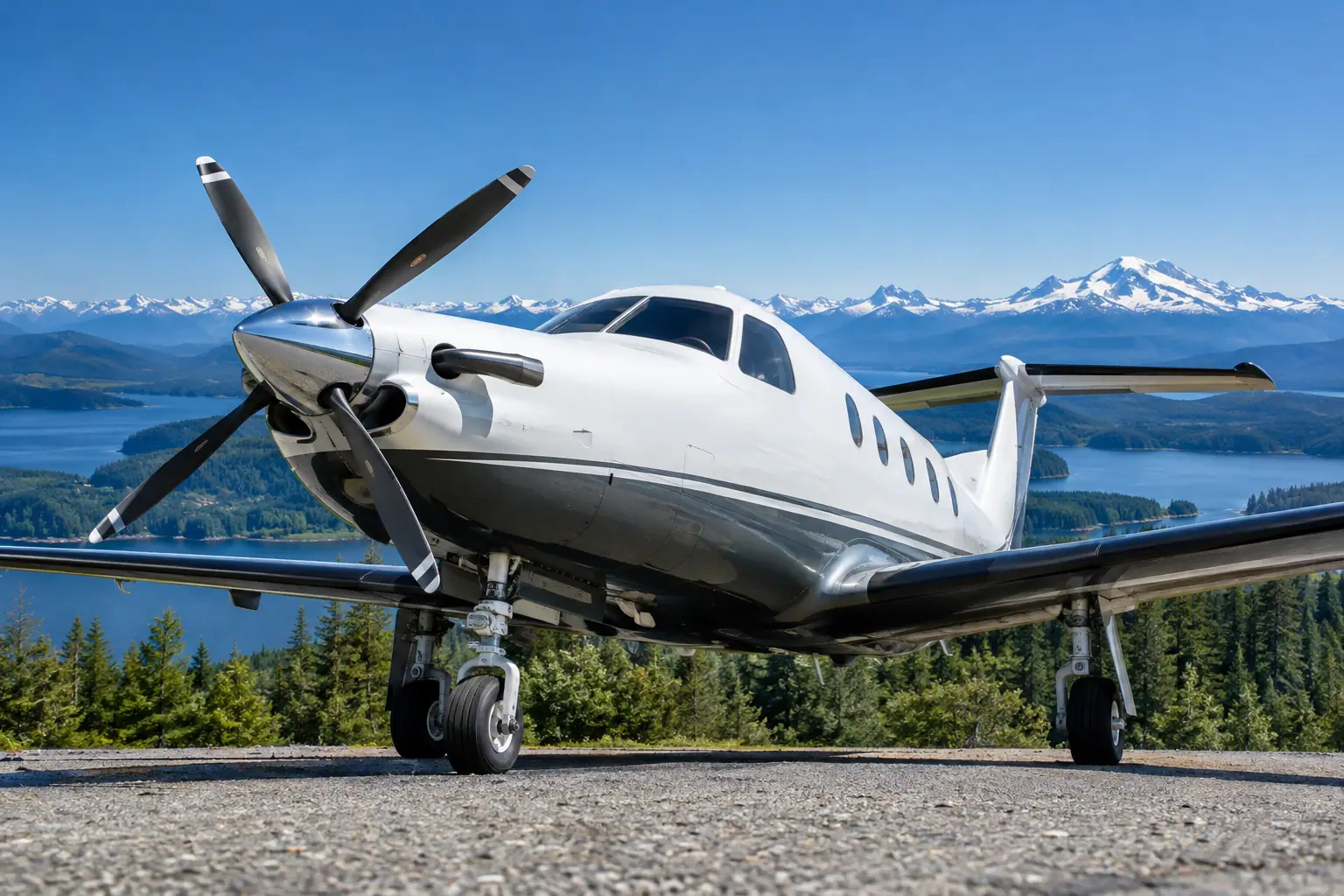
Turboprop
- 6-8 seats
- 300 kt cruise
- 1,500 nm range
Beechcraft King Air 350i, Pilatus PC-12 NGX
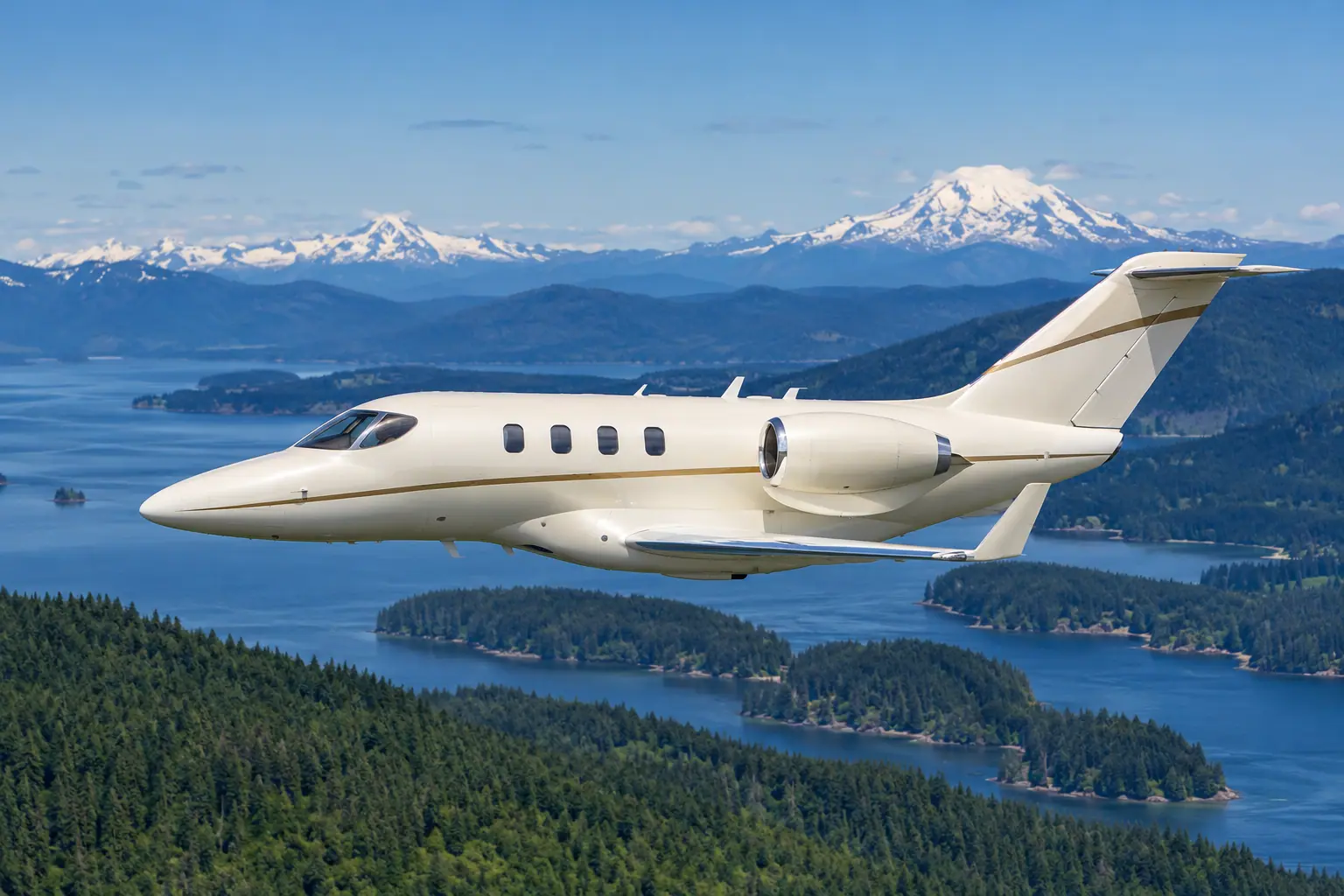
Light jet
- 4-7 seats
- 430 kt cruise
- 1,400 nm range
Embraer Phenom 300E, Pilatus PC-24
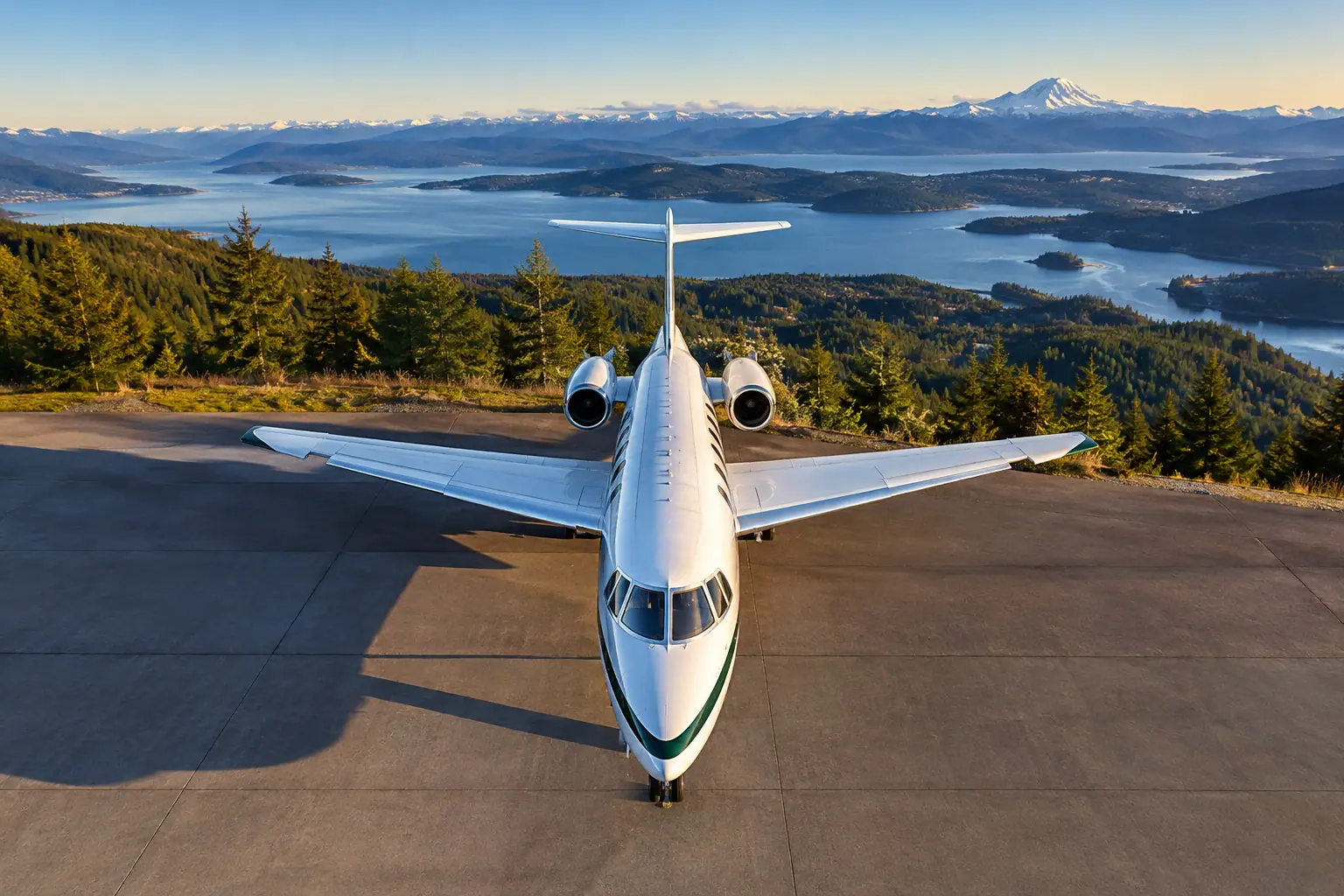
Midsize jet
- 7-9 seats
- 440 kt cruise
- 2,100 nm range
Hawker 800XP, Cessna Citation XLS+
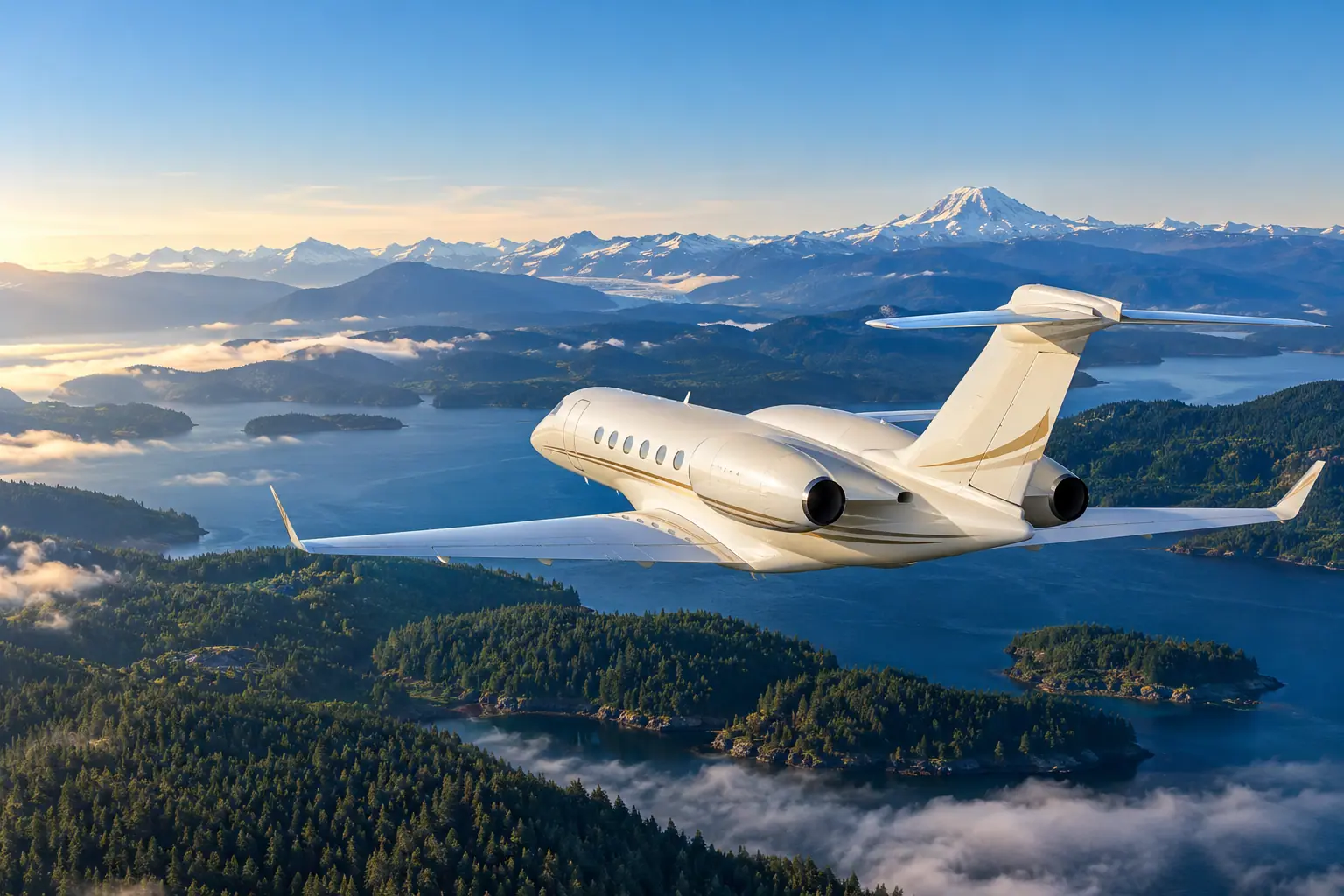
Super-midsize jet
- 8-10 seats
- 470 kt cruise
- 3,200 nm range
Gulfstream G280, Cessna Citation X+
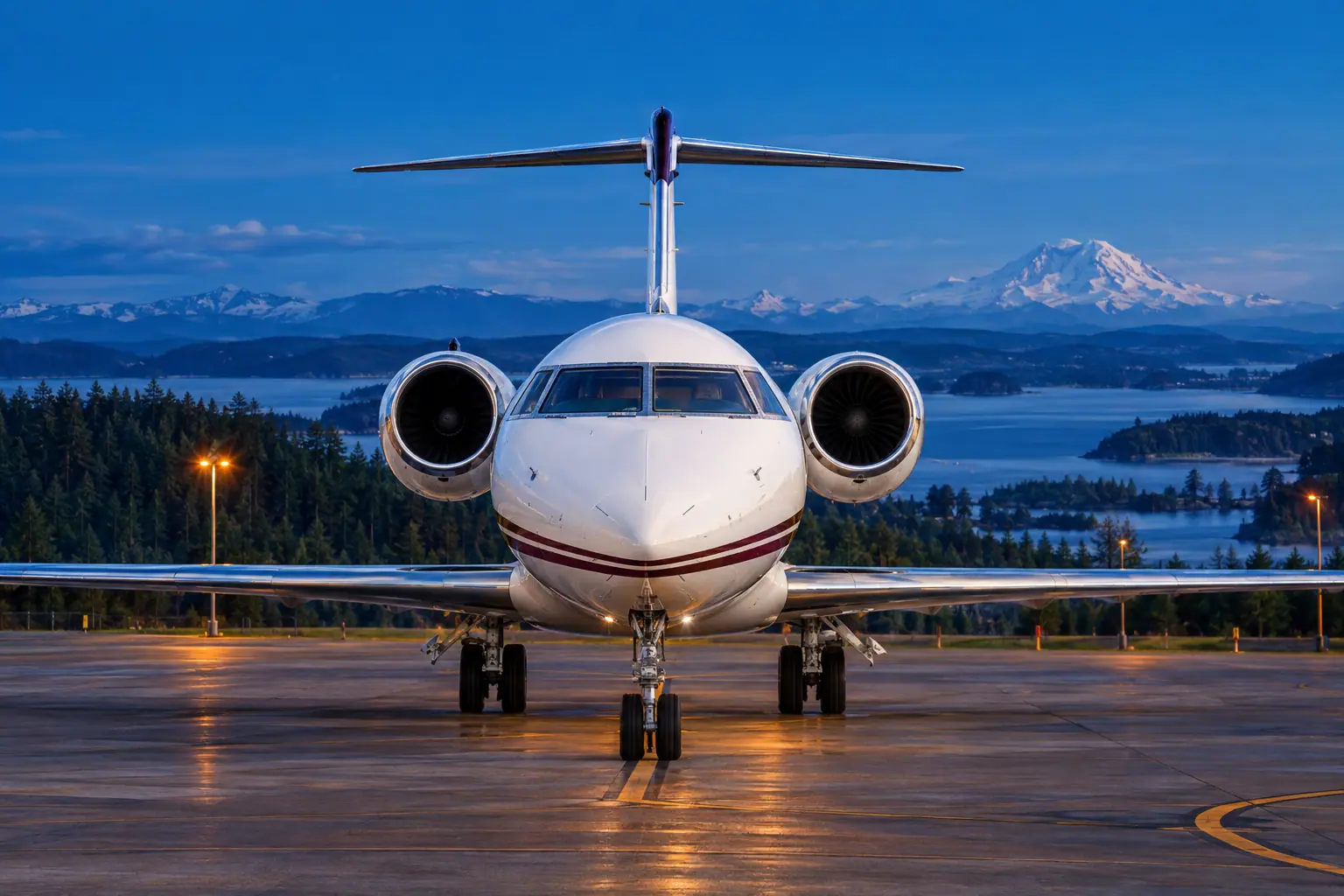
Heavy jet
- 10-14 seats
- 470 kt cruise
- 4,000 nm range
Bombardier Challenger 650, Dassault Falcon 900LX
When Seattle jet charter demand peaks
Demand climbs in July and August, when highs reach 76F and 77F and wet days fall to 3 and 5, respectively. That is the Alaska cruise and mountain season, and aircraft based in Seattle get booked early for weekend departures.
Holiday weeks around Thanksgiving, Christmas and New Year are the tightest for availability. If you are traveling with a group and need a specific aircraft class, then booking several weeks out gives you real choices instead of leftovers. Spring and fall are quieter, with fewer wet days in May and September, and quote comparisons are easier to make.
Airports serving jet charters in Seattle
Four airports handle most jet charters in Seattle, and the right one depends on where you live and how far you are flying. Each lists its elevation, runway length and peak density altitude:
KBFI sits at 21 feet with a 10,007-foot runway and four FBOs, making it the most flexible field for jets near downtown Seattle. Peak density altitude at 115F is about 1,800 feet, so summer performance is rarely a concern here. King County International at Boeing Field is the default for light and midsize jets in Seattle because it is close to the city and handles heavy traffic well.
KPAE is at 606 feet with a 9,010-foot runway and serves Snohomish County and the north end. Peak density altitude at 115F reaches about 2,500 feet, the highest of the four, so hot-day departures in a loaded light jet need a second look.
KPWT at Bremerton is 444 feet with a 6,000-foot runway and one FBO, Avian Flight Center. It suits Kitsap Peninsula travelers, though the shorter runway limits heavy jets on warm days, when density altitude climbs to about 2,300 feet.
KSEA is the airline field, at 433 feet with an 11,901-foot runway and Signature Aviation. Peak density altitude at 115F is about 2,300 feet, and the long runway helps heavy jets, but expect airline congestion when you time your departure.
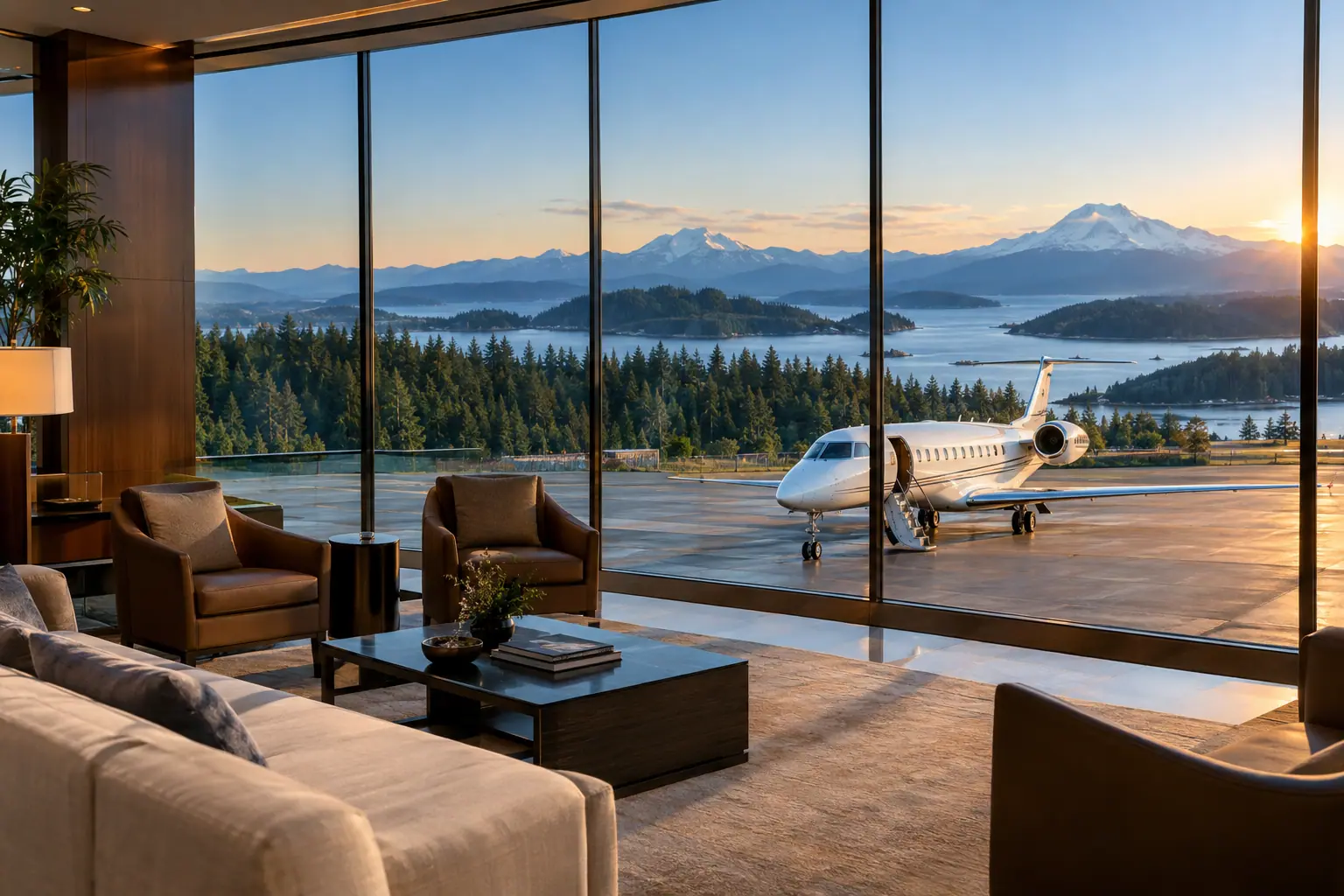
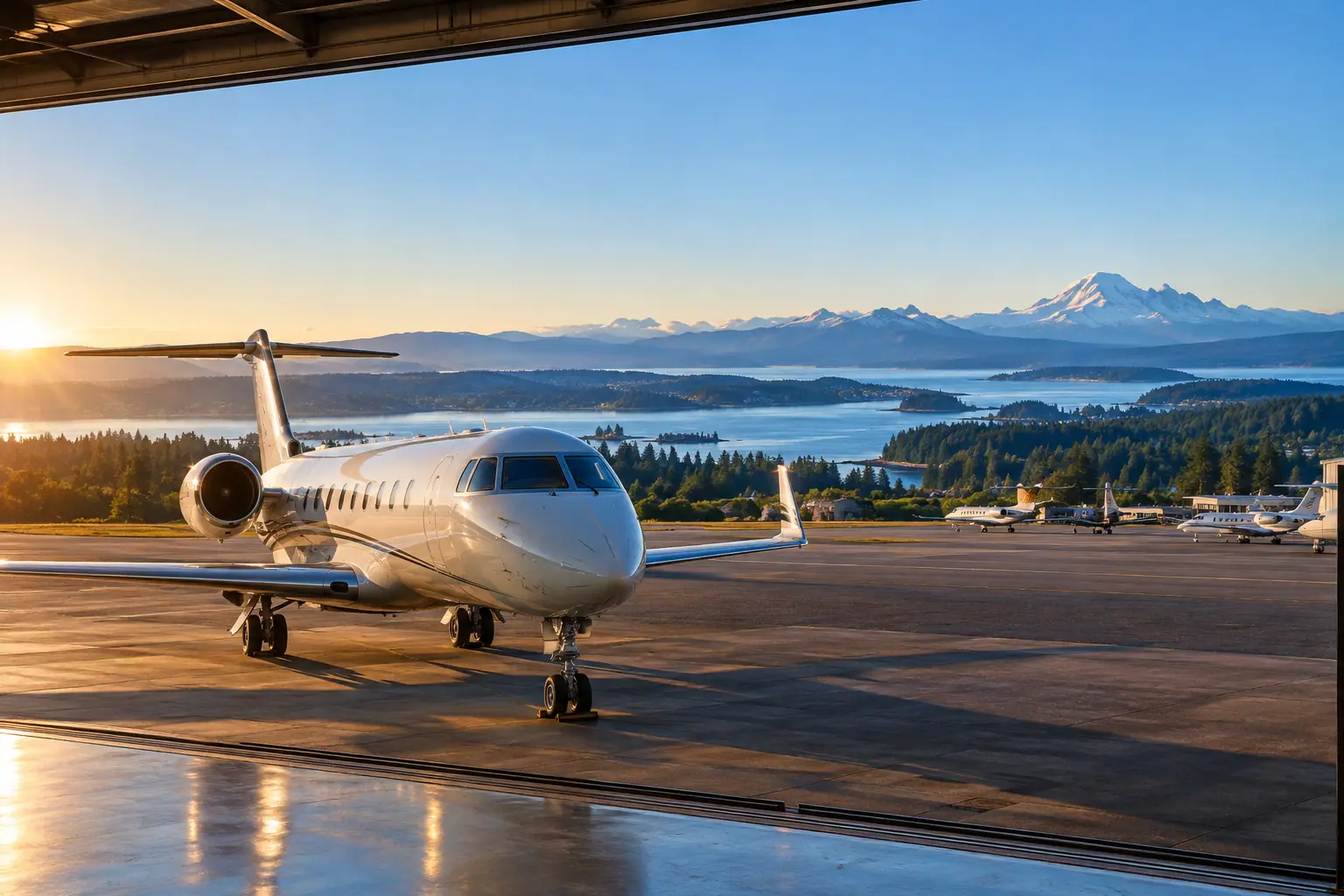
King County International Airport - Boeing Field
- KBFI code
- 10,007 ft runway
- 6 mi to Downtown Seattle
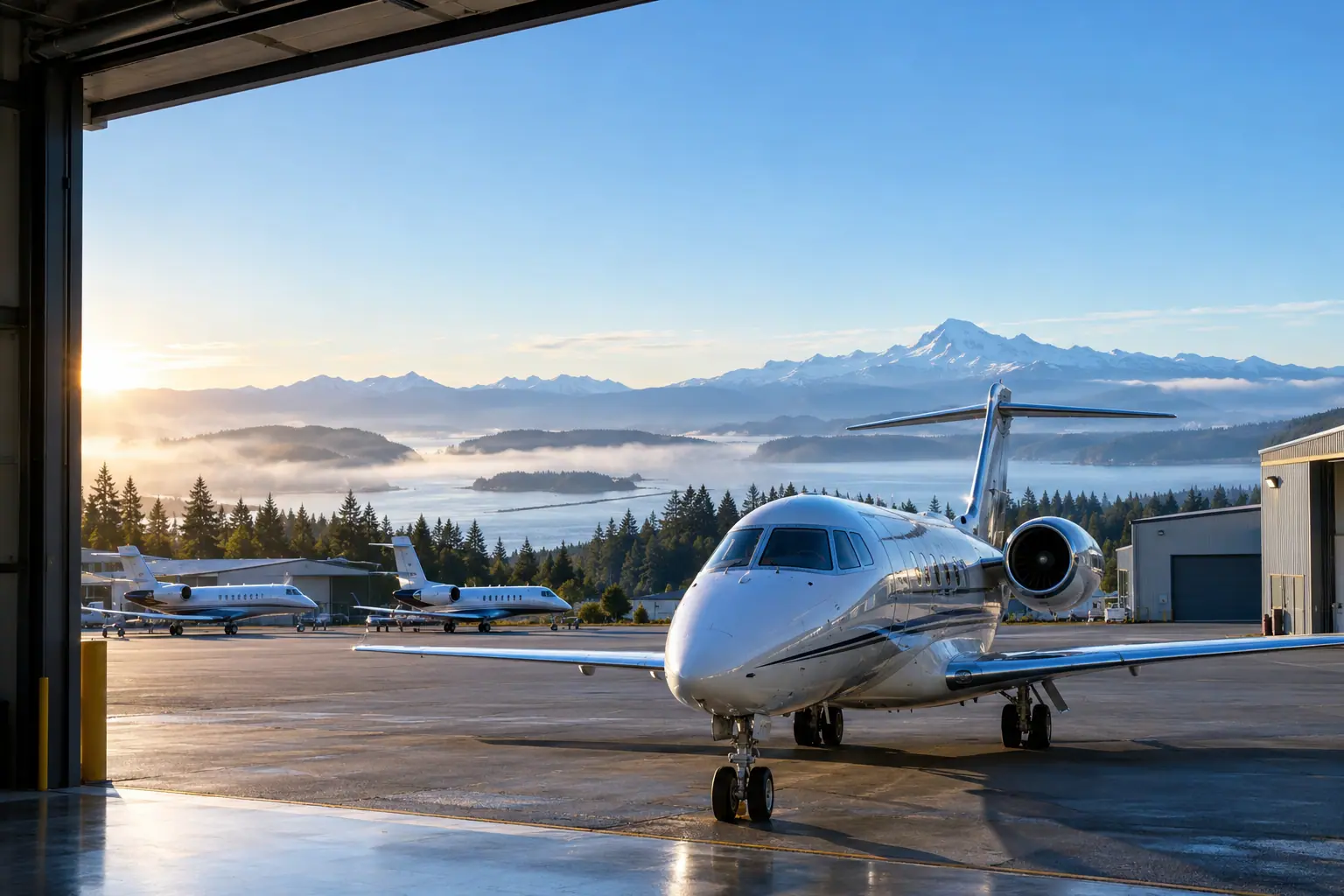
Seattle Paine Field International Airport
- KPAE code
- 9,010 ft runway
- 21 mi to Downtown Seattle
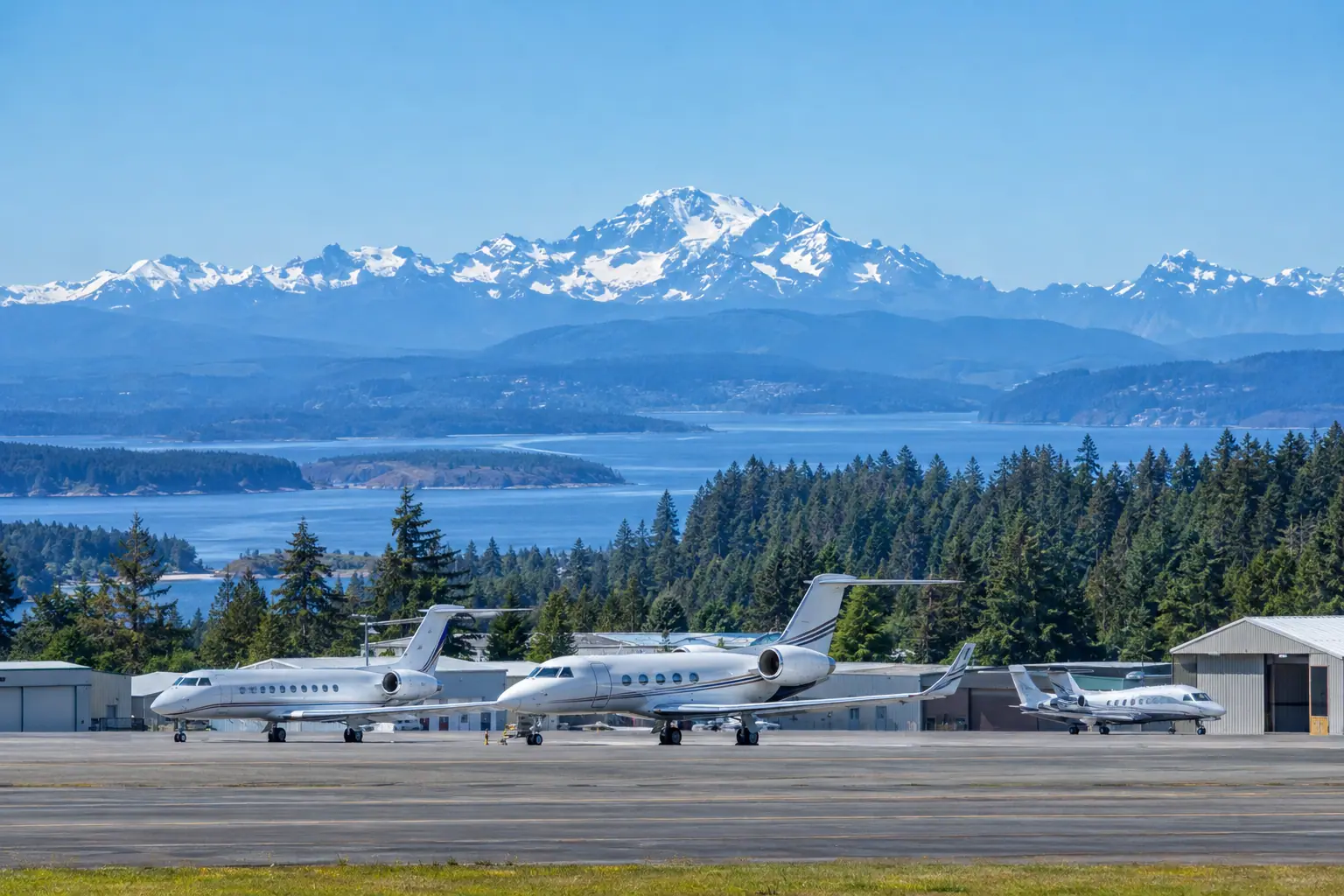
Bremerton National Airport
- KPWT code
- 6,000 ft runway
- 22 mi to Downtown Seattle
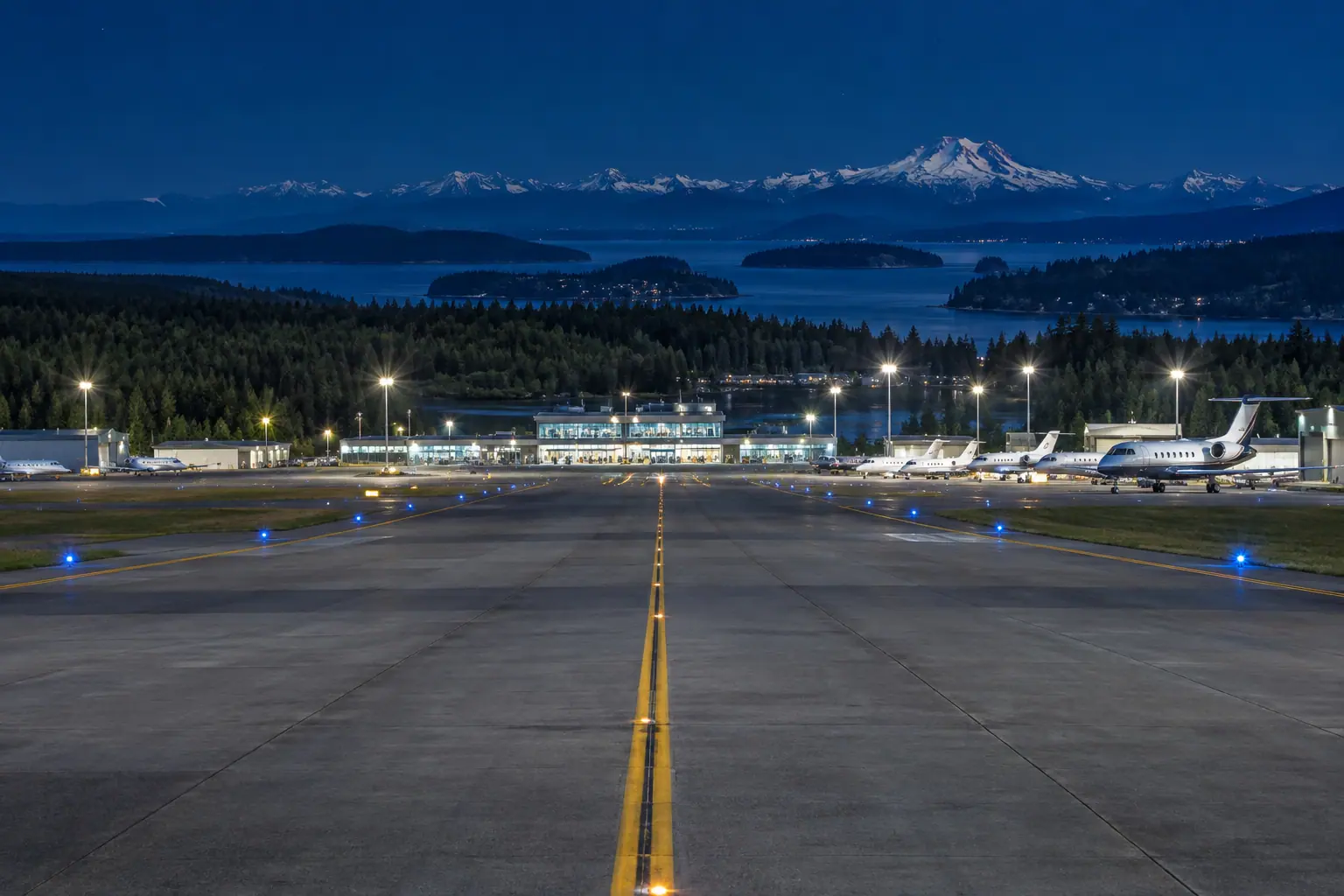
Seattle–Tacoma International Airport
- KSEA code
- 11,901 ft runway
- 11 mi to Downtown Seattle
Weather and density altitude
Summer afternoons at Paine Field push density altitude toward 2,500 feet, so performance planning matters for loaded light jets. July and August highs sit at 76F and 77F, but an occasional 90F-plus day raises the number fast. If you are flying a full light jet out of a shorter runway, then a morning departure usually gives better margins.
Rain and low ceilings define the other half of the year. November, December and January each average 18 wet days, and December highs drop to 45F. That means instrument approaches and deicing, which add time and cost.
If a winter storm closes mountain passes or snarls I-5 on the way to the airport, then a charter's fixed departure time becomes a real planning problem rather than an inconvenience. Build a buffer the night before an early departure. The mountain weather east of the Cascades also affects routes to the interior, and an operator may file a different track to avoid turbulence.
| Month | Avg high | Wet days | KBFI DA | KPAE DA | KPWT DA |
|---|---|---|---|---|---|
| Jan | 47°F | 18 | -800 ft | 0 ft | -200 ft |
| Feb | 47°F | 16 | -800 ft | 0 ft | -200 ft |
| Mar | 52°F | 15 | -400 ft | 300 ft | 100 ft |
| Apr | 57°F | 14 | -100 ft | 600 ft | 400 ft |
| May | 64°F | 10 | 400 ft | 1,100 ft | 900 ft |
| Jun | 70°F | 8 | 800 ft | 1,500 ft | 1,300 ft |
| Jul | 76°F | 3 | 1,200 ft | 1,900 ft | 1,700 ft |
| Aug | 77°F | 5 | 1,200 ft | 2,000 ft | 1,800 ft |
| Sep | 69°F | 10 | 700 ft | 1,400 ft | 1,200 ft |
| Oct | 59°F | 14 | 0 ft | 800 ft | 600 ft |
| Nov | 50°F | 18 | -600 ft | 200 ft | 0 ft |
| Dec | 45°F | 18 | -900 ft | -200 ft | -400 ft |
Rain days means days with at least 1 mm of precipitation. Density altitude computed at the mean afternoon peak using a rule-of-thumb method. Operators rely on their own performance figures.
What jet charters in Seattle cost
Jet charters in Seattle price out from the aircraft class and the hours flown, with turboprops at $2,200 to $3,500 per hour and heavy jets at $9,500 to $14,500 per hour. A light jet sits between at $3,800 to $5,800, a midsize at $5,200 to $7,800, and a super-midsize at $7,200 to $10,000. All of these are estimates and exclude positioning, crew overnight and landing fees.
Seattle light jet charters often quote between $8,500 and $15,000 one way to Phoenix or Los Angeles. A Boston or New York run in the same class lands nearer $23,500 to $36,500 because the distance is over 2,000 nautical miles. When operators reposition an aircraft into Boeing Field or Paine Field, the empty leg can price below a standard round trip, and if you can move your date by a day, that is where the savings usually appear.
| Class | Seats | Hourly estimate | Phoenix → Seattle |
|---|---|---|---|
| Turboprop | 6-8 | $2,200–$3,500 | $8,000–$12,500 |
| Light jet | 4-7 | $3,800–$5,800 | $10,000–$15,000 |
| Midsize jet | 7-9 | $5,200–$7,800 | $13,500–$20,000 |
| Super-midsize jet | 8-10 | $7,200–$10,000 | $17,500–$24,000 |
| Heavy jet | 10-14 | $9,500–$14,500 | $23,000–$35,000 |
Seattle routes and flight times
Seattle to Los Angeles runs 818 nautical miles and about 2 hours 18 minutes in a light jet, with estimates from $8,500 to $13,500. Las Vegas is 757 nautical miles at 2 hours 9 minutes, and San Francisco is 595 at 1 hour 45 minutes for $6,500 to $10,000.
Eastbound routes take longer. Chicago is 4 hours 43 minutes, Dallas 4 hours 36 minutes, and the 2,147-nautical-mile Boston leg runs 6 hours 18 minutes. A light jet from Seattle to New York or Boston is a long sit, so many travelers step up a class for the cabin. Winter travel to Aspen is 835 nautical miles and about 2 hours 20 minutes. Mexico and the Caribbean add range questions: Cabo San Lucas is 1,583 nautical miles, and Nassau is 2,507. If your trip crosses a border, CBP clearance applies on the return, so build the stop into the schedule.
- Phoenix → Seattle2h 37m
- Los Angeles → Seattle2h 18m
- Houston → Seattle5h 04m
- New York → Seattle6h 08m
- San Diego → Seattle2h 29m
- Chicago → Seattle4h 43m
- Dallas → Seattle4h 36m
- Atlanta → Seattle5h 40m
- Washington, DC → Seattle5h 56m
- Boston → Seattle6h 18m
- Philadelphia → Seattle6h 05m
- Denver → Seattle2h 29m
- San Francisco → Seattle1h 45m
- Las Vegas → Seattle2h 09m
- Nashville → Seattle5h 14m
- Charlotte → Seattle5h 53m
- Seattle → Los Angeles2h 18m
- Seattle → Las Vegas2h 09m
- Seattle → New York6h 08m
- Seattle → San Francisco1h 45m
- Seattle → Aspen2h 20m
- Seattle → Nassau7h 10m
- Seattle → Cabo San Lucas4h 55m
- Seattle → Turks and Caicos8h 00m
How to arrange jet charters in Seattle
Send the trip details
Give dates, passenger count, and the airports you want. If you are flexible by a day, say so, because repositioning aircraft out of Boeing Field or Paine Field can change the price.
Compare classes and quotes
You get options across turboprop, light, midsize and heavy jets with hourly estimates. Ask for the tail number and the operating certificate so you know who flies the trip.
Confirm the operator
The flight is flown by an FAA Part 135 operator that holds operational control. As a DOT Part 295 broker we arrange the charter as your agent, and we confirm the operator before you pay.
Plan ground and customs
Sort ground transport, and for international legs build in CBP clearance and any passport requirements. TSA rules apply at some private terminals, so carry ID for every passenger.
Common questions
What do jet charters Seattle cost per hour?
Turboprops run $2,200 to $3,500 per hour, light jets $3,800 to $5,800, midsize $5,200 to $7,800, super-midsize $7,200 to $10,000, and heavy jets $9,500 to $14,500. Those are estimates before positioning, landing fees and crew overnight. A short Seattle-to-San Francisco one way in a light jet is quoted around $6,500 to $10,000.
Which airport should I use for a Seattle private flight?
Boeing Field, KBFI, is the usual pick: 21 feet elevation, a 10,007-foot runway and four FBOs, and it is close to downtown. Paine Field, KPAE, suits the north end at 606 feet with a 9,010-foot runway. Bremerton, KPWT, works for Kitsap travelers, and KSEA has the long 11,901-foot runway but airline traffic.
How long is a light jet flight from Seattle to Los Angeles?
About 2 hours 18 minutes over 818 nautical miles. Estimates run $8,500 to $13,500 one way in a light jet. Las Vegas is shorter at 2 hours 9 minutes over 757 nautical miles, and San Francisco is 1 hour 45 minutes over 595 nautical miles.
Can a light jet fly from Seattle to New York?
It is 2,080 nautical miles and roughly 6 hours 8 minutes, which is near the edge of a light jet's 1,400-nautical-mile typical range once winds and reserves are counted. Most travelers on that route move to a super-midsize or heavy jet. Estimates for the light jet run $23,500 to $35,500.
Who operates the aircraft on a Seattle jet charter?
The flight is flown by an FAA Part 135 operator that holds operational control of the aircraft. We act as a DOT Part 295 charter broker and arrange the trip as your agent, so we are not the operator. Ask for the certificate and tail number before you book, and confirm insurance limits for your passenger count.
Do I need customs for a charter from Seattle to Mexico?
Yes. Cabo San Lucas is 1,583 nautical miles and about 4 hours 55 minutes in a light jet, and the return crosses a border, so CBP clearance applies. Nassau at 2,507 nautical miles and Turks and Caicos at 2,848 both need a longer-range aircraft and advance customs planning. Have passports ready for every passenger.